
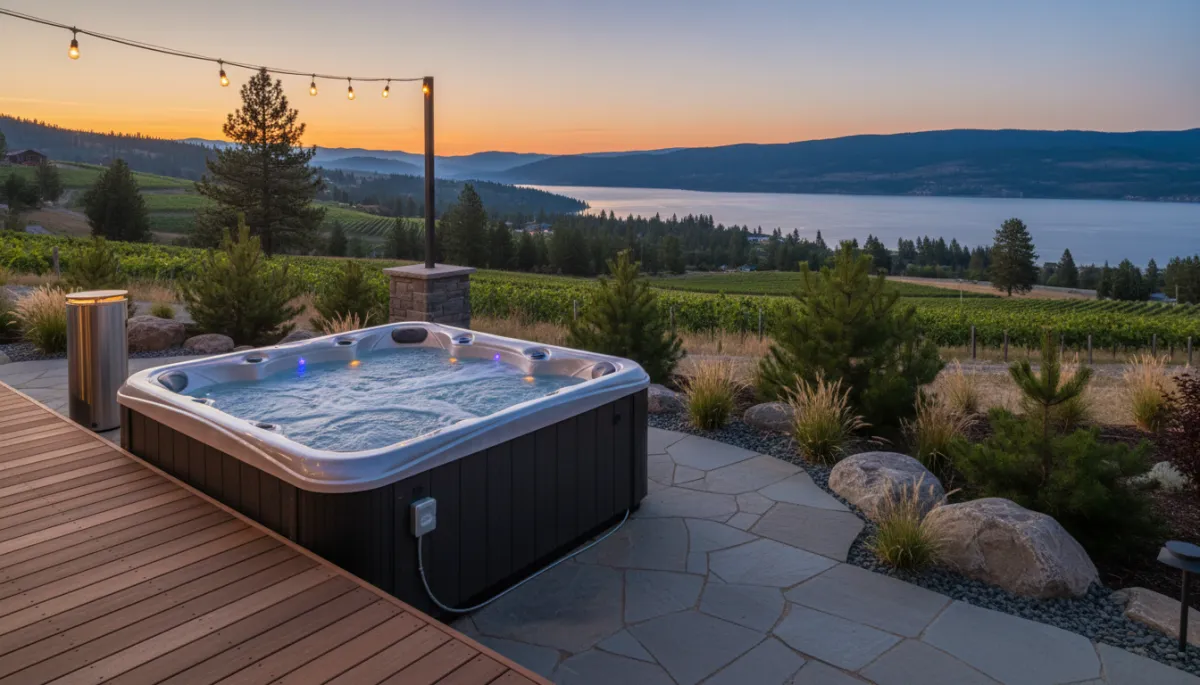
Hot Tubs & Outdoor Wiring in North Okanagan
Home Improvement, Hot Tubs, Outdoor Electrical, North Okanagan
Hot Tubs & Outdoor Wiring: What Every North Okanagan Homeowner Needs to Know
Adding a hot tub to your North Okanagan backyard is a fantastic way to enjoy four seasons of relaxation, but the electrical work behind that bubbling water is anything but casual. Understanding how hot tubs and outdoor wiring work together will help you stay safe, pass inspections, and avoid expensive surprises down the road.
Why Hot Tubs in the North Okanagan Need Special Electrical Attention
Hot tubs draw a lot of power, mix water and electricity, and live outdoors year-round. In the North Okanagan, that means your spa must stand up to temperature swings, snow loads, spring melt, and summer dust. All of this puts extra stress on wiring, connections, and protective devices. A properly wired hot tub is not just about comfort—it is about life safety, protecting your home from shock hazards, electrical fires, and nuisance tripping that can damage equipment or leave you without heat in the middle of January.
Most modern hot tubs require a dedicated 240‑volt circuit with a substantial amperage rating. The wiring must be sized correctly, protected from the elements, and installed to meet the BC Electrical Code and local North Okanagan inspection requirements. Cutting corners may not be obvious at first, but issues often show up later through corrosion, overheating, or failed components—usually when you most want to use the tub.
Hot Tub Basics: Power, Placement, and Safety Zones
Before you even pour a pad or build a deck, it is worth understanding how your hot tub’s electrical needs will shape your layout. Different models have different requirements, but most full‑size outdoor spas fall into one of two categories:
Plug‑and‑play (120V) hot tubs – Smaller units that plug into a standard outlet. They are convenient but often slower to heat and may not run all pumps and heaters at once.
Hard‑wired (240V) hot tubs – Larger, more powerful spas that require a dedicated circuit, a disconnect, and professional installation. These are common choices for North Okanagan homeowners who want reliable winter performance.
Location matters, too. Your hot tub must be positioned so that electrical equipment, outlets, and switches maintain safe distances from the water. Overhead power lines, low‑mounted receptacles, and extension cords are all red flags. A licensed electrician will look at where your main panel is, how to route a safe path for conduit, and where to place a shut‑off that is both close enough for emergency access and far enough from the water to be safe and code‑compliant.
💡 Pro Tip: When you shop for a hot tub, bring photos and basic measurements of your yard and electrical panel. A quick review with an electrician before you buy can save you from choosing a model that is difficult or expensive to wire in your specific North Okanagan property.
Outdoor Wiring 101: What Makes Exterior Electrical Different
Wiring that lives outdoors has a much harder life than wiring inside your walls. In the North Okanagan, it must cope with moisture, UV exposure, freeze‑thaw cycles, and critters that love to chew. That is why outdoor circuits, especially those near water, rely on a combination of proper cable types, conduit, weather‑rated boxes, and ground fault protection.
Weather‑resistant materials: Cables and fittings must be rated for wet locations. Regular indoor wire is not designed for buried or exposed outdoor use and can break down quickly when exposed to moisture and sunlight.
Conduit and burial depth: Underground runs to a backyard spa typically go through PVC or rigid conduit at specific depths. This protects the wiring from shovels, frost heave, and vehicle traffic if it passes under a driveway or patio.
GFCI protection: Ground Fault Circuit Interrupters are mandatory for hot tubs and outdoor receptacles. They shut power off in fractions of a second if they detect a fault that could cause a shock.
Done correctly, outdoor wiring almost disappears into your landscaping or deck structure. Done poorly, it shows up as loose cords, makeshift junction boxes, or unprotected cable stapled along fences. These shortcuts may look “good enough” on a dry summer day but can become dangerous once snow, ice, and standing water arrive.
Key Electrical Considerations for North Okanagan Hot Tubs
While only a licensed electrician should design and install your hot tub wiring, it helps to understand the main decisions involved. That way, you can ask informed questions and spot proposals that seem too good to be true. Here are some of the essentials every North Okanagan homeowner should know:
Panel capacity and available amperage – Your existing electrical panel must have enough capacity to safely handle the additional load of a hot tub. In older homes around Vernon, Armstrong, or Lumby, you may be close to the limit, especially if you have electric heat, a workshop, or EV charging. Sometimes a panel upgrade or sub‑panel is the safest path forward.
Dedicated circuit and breaker size – Hot tubs typically require their own circuit, sized according to the manufacturer’s specifications. Sharing a circuit with other outdoor loads—like heaters, lighting, or power tools—is asking for nuisance trips and potential overheating.
Spa disconnect location – Code requires a means of disconnecting power within sight of the hot tub, but not so close that you could touch it from the water. In practice, this often means a weatherproof disconnect mounted on the house or a nearby post, positioned with both safety and aesthetics in mind.
Bonding and grounding – Any metal components near the tub—railings, steps, or structural supports—may need to be bonded. Proper grounding ensures that, if a fault occurs, electricity has a safe path to earth instead of through a person in the water.
Weather, snow, and drainage – In the North Okanagan, it is common for snowbanks to build up around decks and patios. Your electrician will consider how meltwater flows, where ice forms, and how to protect boxes and conduits from standing water or physical damage from snow removal.
Permits, Inspections, and Local Rules: Why They Matter
In British Columbia, electrical work for hot tubs and outdoor wiring is not a “do‑it‑yourself and forget it” project. Permits and inspections exist to protect you, your family, and future owners of your home. A licensed electrical contractor will obtain the necessary permit, complete the work to code, and arrange for an inspection through the appropriate authority for your part of the North Okanagan.
Skipping this step can have real consequences. Insurance companies may deny claims related to unpermitted electrical work. Future buyers, home inspectors, or even mortgage lenders can raise red flags if they see a hot tub with no documentation. By contrast, a signed‑off permit gives you peace of mind and a paper trail showing the work was done properly and safely.
📌 Key Takeaway: If a contractor suggests you can “save money” by skipping permits or inspections, treat that as a warning sign, not a selling feature.
Common Hot Tub Wiring Mistakes Homeowners Should Watch For
Even if you are not doing the work yourself, it helps to recognize a few common issues that show up around hot tubs and outdoor wiring. If you see any of the following around your North Okanagan property, it is worth having a licensed electrician take a look:
Extension cords or power bars feeding a hot tub or outdoor heater.
Exposed cable running along fences, under doors, or across walkways.
Junction boxes without covers, or covers that are cracked or rusted.
GFCI outlets or breakers that trip frequently and are never investigated.
Electrical equipment mounted so close to the hot tub that you can reach it while sitting in the water.
None of these issues are worth “living with.” Because water, people, and electricity are involved, even a minor wiring problem around a hot tub should be treated as urgent. A quick service call is a small investment compared to the potential risks of shock, fire, or equipment damage.
Planning Your Backyard: Lighting, Outlets, and Future Add‑Ons
Most North Okanagan homeowners do not stop at just a hot tub. Once you start enjoying evenings outside, you might add landscape lighting, a pergola, a patio heater, or an outdoor kitchen. When your electrician designs the wiring for your spa, it is a perfect time to think ahead and plan for these future upgrades instead of patching things together later.
Deck and step lighting improves safety on icy or wet nights and can be tied into the same outdoor electrical plan.
Convenient outdoor outlets for speakers, small appliances, or seasonal décor reduce the temptation to use long extension cords from the house.
Rough‑ins for future features—like a sauna, gazebo, or outdoor kitchen—can be added while trenches are open, saving time and money down the road.
A well‑thought‑out electrical plan supports how you actually live in your space: where you step out of the tub, hang towels, set down drinks, or gather with family. It is about more than just meeting code; it is about making your backyard both safe and comfortable through every North Okanagan season.
Final Thoughts: Enjoy the Soak, Leave the Wiring to the Pros
A hot tub can be one of the best investments you make in your North Okanagan home. It adds relaxation, social space, and year‑round enjoyment—even when the snow is falling and the thermometer dips well below zero. But that enjoyment depends on one crucial piece of the puzzle: safe, reliable outdoor wiring installed by someone who understands both local conditions and electrical code requirements.
As a homeowner, you do not need to know every technical detail, but you should feel confident asking about permits, GFCI protection, conduit, and panel capacity. Choose a licensed electrician who is familiar with North Okanagan homes, be honest about your future backyard plans, and resist the urge to cut corners with DIY fixes or unpermitted work.
When hot tubs and outdoor wiring are done right, you barely notice the electrical side at all—everything just works. The water stays hot, the pumps stay quiet, the lights come on with a switch, and you can relax knowing that beneath the surface, your installation is safe, compliant, and ready for many seasons of use in the North Okanagan climate.